Bay St. Louis Condo Insurance: Why Wind Pool Matters More
August 6, 2026
August 6, 2026
Every Old Town listing sheet leads with the same three words. Flood Zone X. It's a real distinction, and for a buyer who has spent an afternoon scrolling coastal listings from New Orleans to Pensacola, it lands as shorthand for "insurance won't kill this deal."
That shorthand is mostly wrong. Flood is the smaller of the two coastal premiums a Bay St. Louis owner pays. The larger one, wind, is set by a state pool that raised rates on January 1 of this year, and it doesn't care whether your address is in Zone X or on Beach Boulevard.
The variable that decides your monthly carry on a Bay St. Louis condo is the wind line, not the flood line, and it is the one buyers underestimate the most while touring.
A Zone X designation means the property sits outside FEMA's Special Flood Hazard Area. For a buyer with a federally backed mortgage, that's the difference between a lender requiring NFIP flood coverage and a lender leaving that decision to you. It is not the difference between paying for coastal risk and not paying for it.
The savings are real but narrow. NFIP building coverage caps at $250,000 on a residential policy, and premiums for low-risk zones typically run in the low hundreds annually rather than the thousands charged in high-risk AE and V zones. Skipping a mandatory flood policy on a condo unit is a genuine line item, but it is the smaller of the two carrying costs a coastal Mississippi owner faces.
In coastal Mississippi, standard homeowner and condo policies routinely exclude wind and hail. Wind gets bought separately, often through the Mississippi Windstorm Underwriting Association, and in Mississippi, wind coverage alone can account for 70% of a homeowner's total insurance cost. That share is why the Zone X headline flatters the wrong variable. You can be in the safest FEMA flood zone in Hancock County and still write the biggest check of the year to a wind carrier.
For condo unit owners specifically, Gulf Coast condos in Biloxi, Gulfport, Pass Christian, and Bay St. Louis run $1,200 to $2,500 or more per year for HO-6 coverage, with high-end beachfront condos paying significantly more, driven by hurricane and wind exposure, MWUA coordination needs, and post-Katrina market contraction. Set that against Jackson metro condos at $700 to $1,100 per year in a more competitive inland market, and the coastal premium becomes visible as its own number rather than a mood.
| Coverage layer | Who writes it | Typical annual range for a Bay St. Louis condo unit |
|---|---|---|
| HO-6 (interior, contents, liability) | Standard carrier | Component of the $1,200–$2,500+ Gulf Coast HO-6 band |
| Wind and hail | Often MWUA (Wind Pool) | The dominant slice of that premium |
| Flood (NFIP or private) | NFIP or private flood carrier | Optional in Zone X, low hundreds if elected |
The table's point is not the individual cells. It is the shape. Two of the three lines are wind-driven and Zone X does nothing to either of them.
The Mississippi Windstorm Underwriting Association, the Wind Pool, raised rates by 16% on January 1, 2026 for property owners in Hancock, Harrison, Jackson, Pearl River, Stone, and George counties. Hancock is Bay St. Louis. A buyer touring in August is looking at a market where the wind premium comparable a seller quotes from a 2025 renewal is already stale on the low side.
That matters more here than it would in a hot market. In a fast market, buyers absorb rate shifts inside the emotional math of winning a house. Bay St. Louis is not that market. Median list price sat at roughly $399,000 in June 2026, essentially flat year over year, with a median 172 days on market. Homes sit long enough that a buyer has time to price the carry precisely, and a 16% jump to the largest insurance line is the kind of detail that either kills a marginal deal in underwriting or gets absorbed as a concession from a seller who understands why the offer came in where it did.
The mechanics of condo insurance in Mississippi don't map cleanly to what a single-family buyer expects. Most Mississippi condo associations carry one of three master policy types: bare walls-in, single entity, or all-inclusive, and because bare walls-in policies are the most common in Mississippi, most unit owners need substantial dwelling coverage on their HO-6 to cover all interior finishes including drywall, paint, flooring, cabinets, plumbing fixtures, electrical fixtures, and countertops.
Under a bare walls-in association, the HOA insures the building envelope and everything inside your unit becomes yours to cover. In practical terms, that means:
Wind coverage for buildings in Harrison, Hancock, and Jackson counties typically comes through the Mississippi Windstorm Underwriting Association, and the HOA master policy may already include MWUA coverage for the building exterior, but the individual HO-6 policy needs to coordinate with it, which is why buyers should work with an agent who understands the MWUA system so interior unit coverage properly dovetails with the HOA's exterior wind coverage. This is where a lot of first-time coastal condo buyers get caught. They assume "the HOA covers the wind" and stop asking questions. What the HOA actually covers depends on which of the three master policy structures the association adopted, and the answer changes what the owner's own HO-6 needs to carry.
Ask for the master policy declarations page during due diligence. Not a summary. The declarations page.
There is a real state program aimed at reducing wind premiums over time. The Strengthen Mississippi Homes program, SB 2409, effective July 1, 2026, grants up to $10,000 for FORTIFIED roof upgrades through the Mississippi Insurance Department, with a $2 million first phase for Gulf Coast Wind Pool policyholders and a statewide rollout expected in 2027.
Read the eligibility carefully before assuming it applies to you. The Mississippi Insurance Department says grant recipients must have been insured through the Wind Pool for three consecutive policy years before becoming eligible to apply for a grant, and homeowners uncertain about their policy history should contact their Wind Pool insurance agent before submitting the form. For a buyer closing on new construction in 2026, that three-year clock has not started. The grant matters for existing owners of older Gulf Coast housing stock; for a new-construction condo purchase, the mitigation savings that count in year one are the ones already built into the structure, not a future retrofit grant.
That flips how buyers should read a new-construction wind quote. The building code the unit was built under, the roof assembly, and any FORTIFIED designation the developer pursued at construction are all doing more work on your premium than any grant program will do for you inside your first three years of ownership.
Take two Bay St. Louis addresses at similar price. One is an Old Town condo unit in Zone X. The other is a single-family cottage a few blocks toward the water in a higher-risk flood zone.
The portal median price won't show you the gap between them. The carry will. The condo owner writes a smaller flood check or none at all, but still pays into a wind premium sized by MWUA rates and mediated by whatever master policy the association carries. The cottage owner writes a mandatory NFIP premium sized by elevation and zone, plus a wind premium that is more likely to be sized by an individual dwelling policy rather than shared across 24 units.
Neither carry is knowable from the listing. Both are knowable in about a week of due diligence: master policy declarations from the HOA, a wind quote pulled through a Hancock County agent who writes MWUA, and a flood quote from either the NFIP tool or a private flood carrier. Do that work before you write the offer, not after inspection. The insurance answer is more likely to change the offer price than the inspection is in a 172-day market.
Does a Flood Zone X address in Bay St. Louis eliminate the need for flood insurance? It removes the federal mandate for a federally backed mortgage. It doesn't eliminate the risk, and some private lenders still require coverage. Flood claims from properties outside high-risk zones are a meaningful share of NFIP payouts nationally, which is why many Zone X owners elect coverage anyway at low-risk-zone pricing.
Can a condo buyer get wind coverage outside the Wind Pool? Sometimes, through private carriers, and sometimes bundled with an HO-6 when the building profile supports it. The building's age, roof assembly, and any FORTIFIED designation influence what the private market will write. For most Gulf Coast Mississippi condos, MWUA is either the direct writer or the backstop that shapes what private carriers charge.
Does the HOA master policy cover my interior finishes after a hurricane? Under a bare walls-in master policy, which is the most common structure in Mississippi, no. The HOA covers the building envelope and your HO-6 covers everything inward from the studs. Ask for the declarations page and confirm the policy type before you close.
If you are pricing a Bay St. Louis condo purchase and want the insurance math done before you write an offer rather than after, 124 Court Development can walk you through what a specific unit's Zone X location, master policy structure, and wind quote add up to on a real monthly carry. Schedule a consultation and bring the listings you are comparing.
Stay up to date on the latest real estate trends.
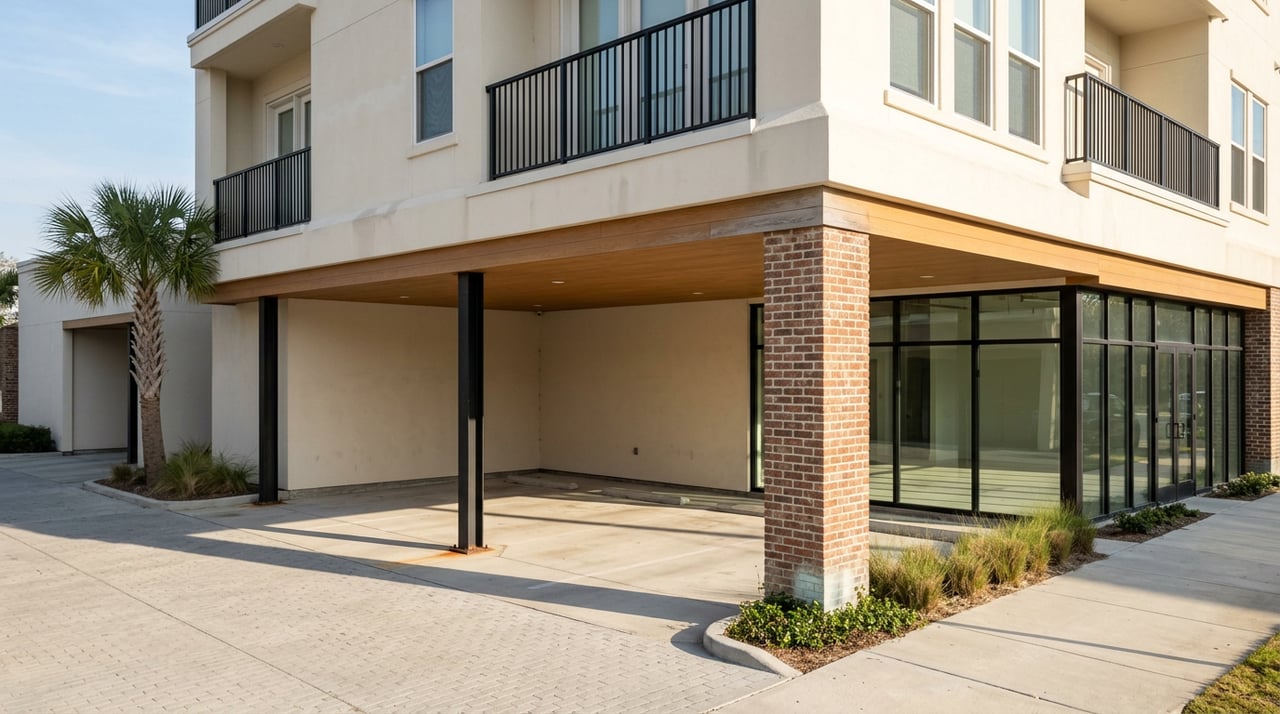
Residential and commercial units available for consideration. For more information or to arrange a site visit, please call developer, Steve Drown, 228-313-1063 or email [email protected]
GET IN TOUCH WITH OUR TEAM TO LEARN MORE

124 COURT ST BAY ST LOUIS, MS 39520